


Why Does a Sump Pump Need Backup Power
A primary sump pump normally depends on household electricity, yet severe rain can raise groundwater while a storm interrupts power. A separate backup pump provides another way to lower the pit. It is protection against a specific failure point, not a substitute for correcting an undersized pit, blocked discharge, poor grading, or sewage backup.
A recent outage stopped the primary pump and water entered the basement.
The existing system has no secondary pump or high-water alarm.
The backup battery no longer holds a charge or fails its self-test.
The primary pump runs for long periods during storms and has no redundancy.
Finished space, stored equipment, or utilities would be damaged by even a shallow flood.
The need is especially practical in low-lying areas near South Oyster Bay and the Massapequa Preserve drainage corridor, where prolonged rain and saturated ground can keep water moving toward a basement after the first storm band passes. Actual risk still depends on the property, foundation, and water-entry pattern.
What We Check First
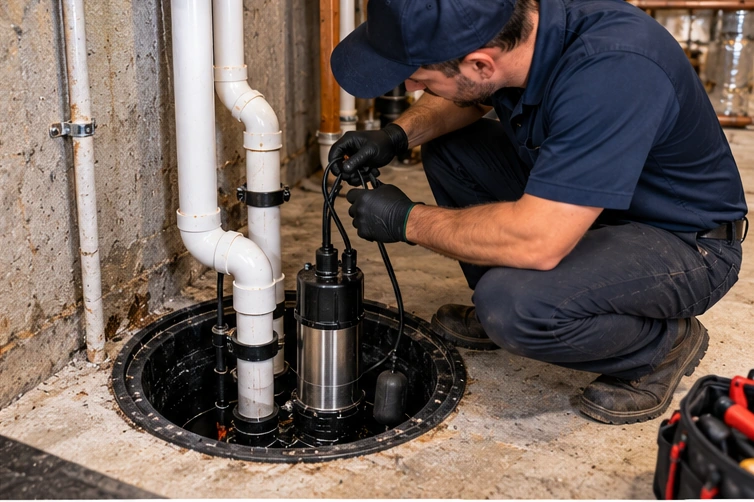
We test the primary pump under load before adding backup equipment. The inspection covers pit size, float clearance, inflow, discharge piping, check valves, outlet and circuit condition, alarm placement, and the height and distance the backup must pump. We also determine whether both pumps can operate without interfering with each other.
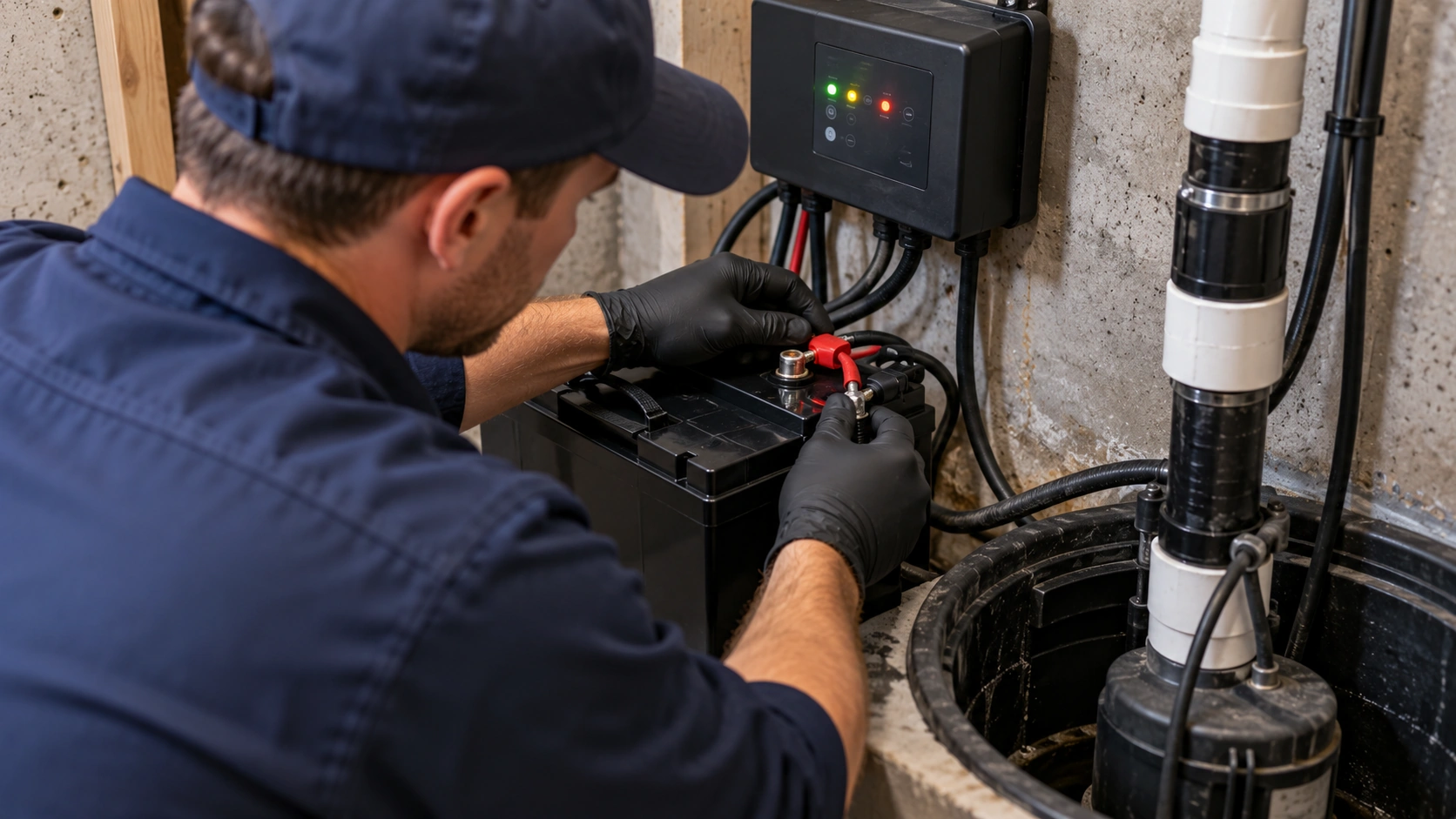
For an existing backup, we inspect terminals, charger status, battery age and condition, alarm history, and visible corrosion or leakage. A green indicator alone is not enough; the system must start and move water when normal power is removed.
Which Backup System Fits the Property
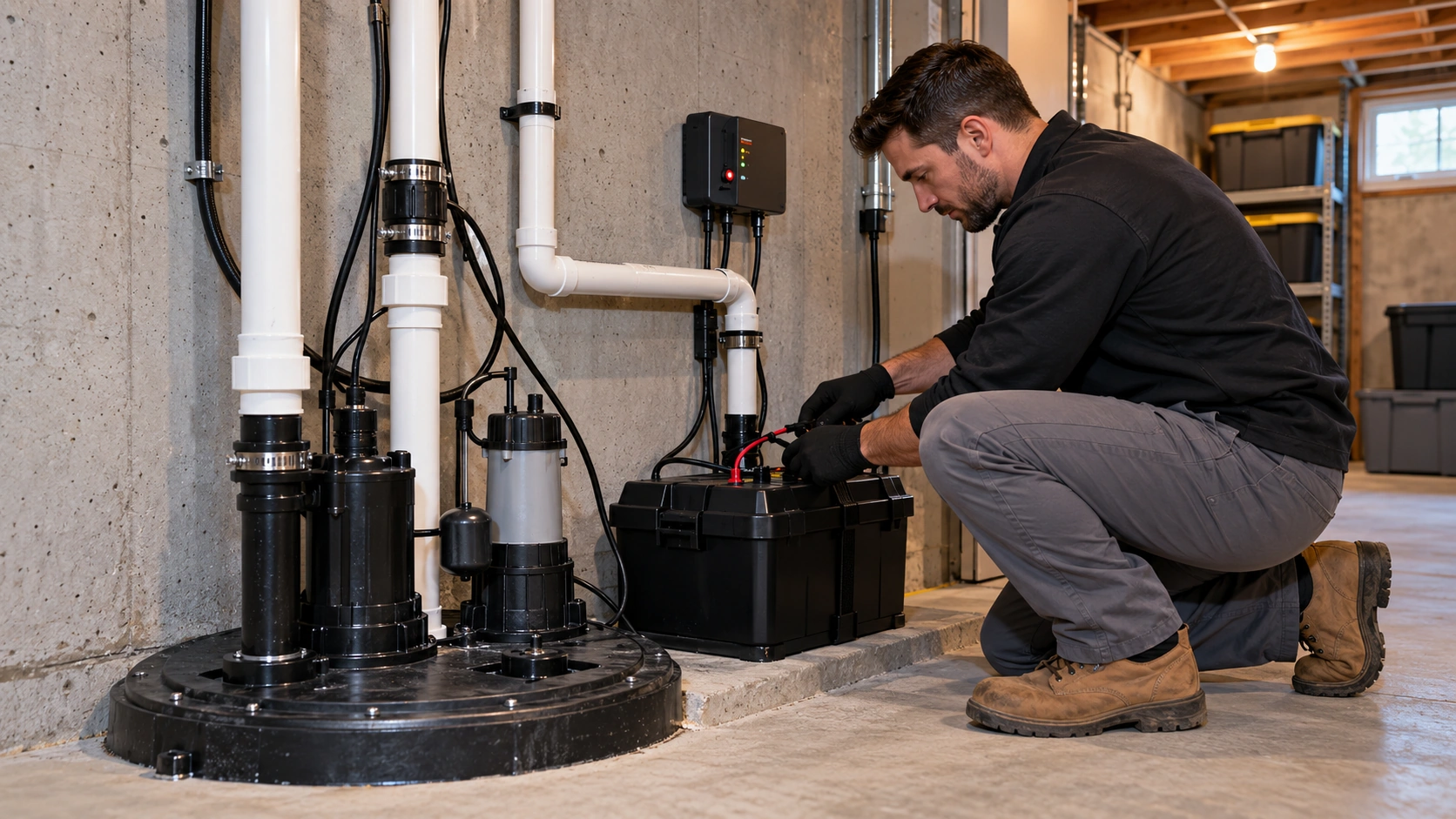
A battery-powered secondary pump is the usual choice because it works independently of the primary unit and can be added to many existing pits. The battery, charger, controller, pump capacity, and alarm must be compatible. Runtime varies with battery condition, pumping rate, lift, and how often the pump cycles.
A water-powered backup may be considered where the building has a suitable municipal water supply, adequate pressure, approved plumbing protection, and a permitted discharge route. It uses water pressure instead of a stored battery, but it is not appropriate for every property and uses potable water while operating.
How Do We Install and Test the Backup
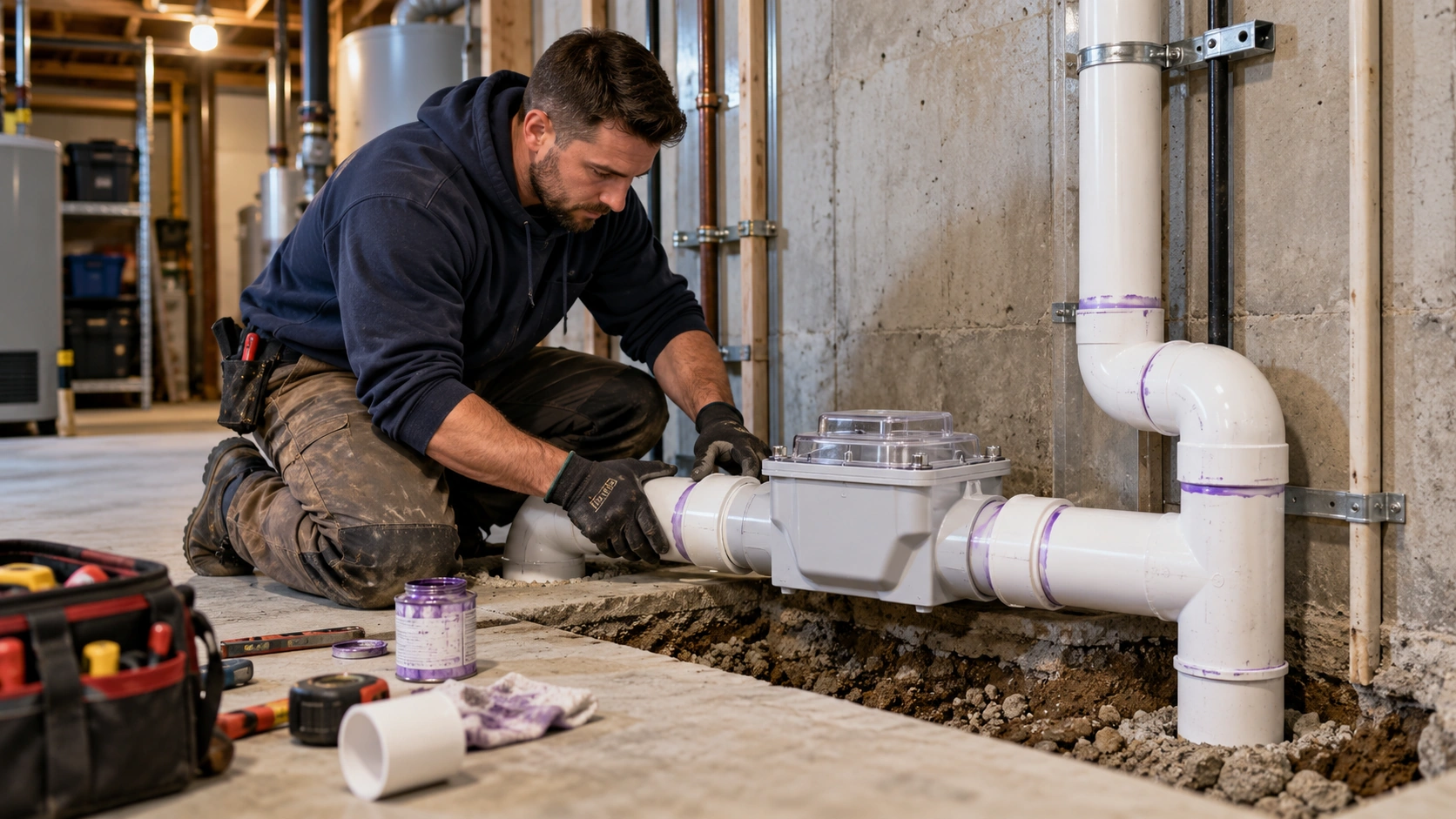
We position the secondary pump and float so they activate above the normal primary-pump level without tangling or striking the pit wall. The discharge and check-valve arrangement is configured for the selected system, the charger and controller are mounted above likely water exposure, and the alarm is placed where it can be heard or monitored.
Testing includes filling the pit, confirming normal primary operation, disconnecting household power, and watching the backup start, discharge, stop, and reset. We record the installed equipment and battery information, explain the warning indicators, and provide applicable product and workmanship warranty terms in writing. Owners also receive a recommended testing and battery-check schedule.
How Much Does a Sump Pump Battery Backup Cost
A professionally installed battery backup commonly adds about $600 to $2,000, depending on pump capacity, battery type, controller, alarm features, pit space, discharge changes, and electrical conditions. Complex dual-pump arrangements or water-powered systems may cost more. The battery may be priced separately from some packaged systems, so the estimate should identify every included component.
Massapequa Plumbing Experts explains the scope and applicable price before approved work begins. Primary-pump replacement, a new basin, drainage channels, waterproofing, sewage cleanup, and finished-basement restoration are separate unless listed.
Why Choose a Licensed Local Plumber
Massapequa Plumbing Experts brings 10 years of plumbing experience to sump systems, drainage problems, and storm-related pump failures. We test the full system under simulated power loss, document the installed equipment, and explain maintenance in plain language so the owner knows what the backup can and cannot protect against.
Review our sump pump and basement flood-prevention service for the parent service scope. If the primary system itself needs replacement or a new pit, see sump pump installation in Massapequa. Visit the Massapequa plumber homepage for other plumbing services.
Frequently Asked Questions
Why is a battery backup so important for Massapequa homes specifically?
Long Island storms frequently cut power at the exact moment flood risk peaks, so a primary pump with no backup becomes useless right when you need it most.
How long does a battery backup last during an outage?
Typically eight to twelve hours depending on water volume, which covers most storm-related outages on Long Island.
Can I add a battery backup to my existing sump pump?
In most cases yes, a backup system can be added to an existing primary pump without replacing the whole setup.