
When Does a Drain Problem Need Professional Cleaning
Professional drain cleaning is appropriate when a blockage returns, several fixtures slow at once, wastewater rises through another drain, or ordinary plunging does not restore dependable flow. The first task is locating the restriction. Treating every backup as a simple sink clog can push the problem farther down the line and delay the correct repair.
A single slow sink often points to a nearby trap or branch drain. Toilets, tubs, and floor drains backing up together usually shift attention toward the building drain, sewer lateral, or the inlet to a cesspool or septic system. When sewage is entering occupied space, stop unnecessary water use and keep people and pets away from the affected area.
For plumbing problems beyond drainage, visit our plumber in Massapequa, NY homepage.
What Are the Signs of a Main Drain or Sewer Problem

Main-line problems usually affect more than one fixture or cause water to appear somewhere other than the fixture being used. Note which fixture was running, where the backup appeared, and whether the problem changes after rain. Those details help distinguish a branch clog from a downstream restriction.
Two or more sinks, tubs, showers, or toilets drain slowly at the same time.
A toilet gurgles when a nearby sink, washer, or shower empties.
Flushing one toilet makes water rise in a tub or basement floor drain.
Sewage odor appears in the basement, yard, or near a drain cleanout.
Wastewater returns after a recent snaking or repeatedly blocks the same fixture group.
An outdoor cleanout holds standing wastewater or shows evidence of overflow.
The lowest fixture backs up first when the household uses a large volume of water.
A drain that stops suddenly after construction or renovation may contain grout, wipes, or debris. A line that worsens over months may have grease, scale, roots, a low section, corrosion, or a failing joint. Cleaning restores flow only when the pipe can still carry wastewater after the obstruction is removed.
Why Are Drain and Sewer Problems Common in Local Homes
Massapequa changed rapidly from estates and open land into dense postwar suburbia. The Historical Society of the Massapequas describes the community’s major transformation after World War II, which means many homes now have decades-old underground and interior drainage components. Actual pipe material and condition still have to be confirmed at each property.
Cast iron can develop internal scale and corrosion that narrow the waterway. Older clay laterals may have joints where roots enter, while mature landscaping can keep sending fine roots toward small leaks. Grease, wipes, hygiene products, food waste, and heavy paper buildup can block newer pipe as well. Salt exposure near the South Shore may add to corrosion risk where vulnerable metal piping or joints are present.
The 423-acre Massapequa Preserve follows former New York City watershed property through the community. Properties near its mature trees and drainage corridor do not all share the same plumbing risk, but root growth, groundwater, lot grade, and access can influence how a buried line is inspected or repaired. Nassau Shores, Harbor Green, Bar Harbor, and Biltmore Shores also have different coastal and access conditions from inland North Massapequa.
Nassau County contains both sewered properties and homes or small businesses served by cesspools and septic systems. Connection type should be verified from the property records and physical layout. A blockage near an onsite system is diagnosed differently from a restriction in a lateral connected to a public sewer.
What We Check First
We first identify whether the stoppage affects one fixture, one branch, or the main building drain. We ask what was in use when the backup appeared, whether rain changes the symptoms, what cleaning has already been attempted, and whether the property connects to a public sewer or an onsite system. Accessible traps, vents, cleanouts, and the lowest fixtures are inspected before equipment is selected.
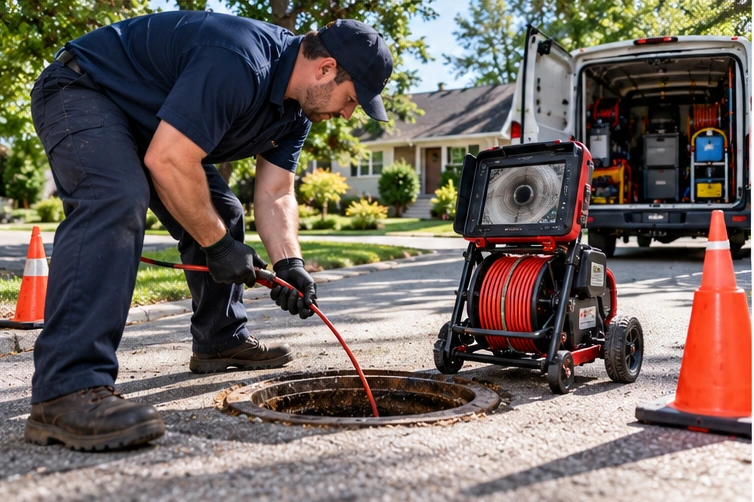
For a main-line problem, a camera may be used to locate standing water, roots, scale, offsets, broken pipe, or an obstruction. The camera is a diagnostic tool, not a substitute for cleaning. Heavy wastewater or grease may need to be cleared first so the lens can show the pipe wall and joints accurately.
How Do We Clean and Verify the Line
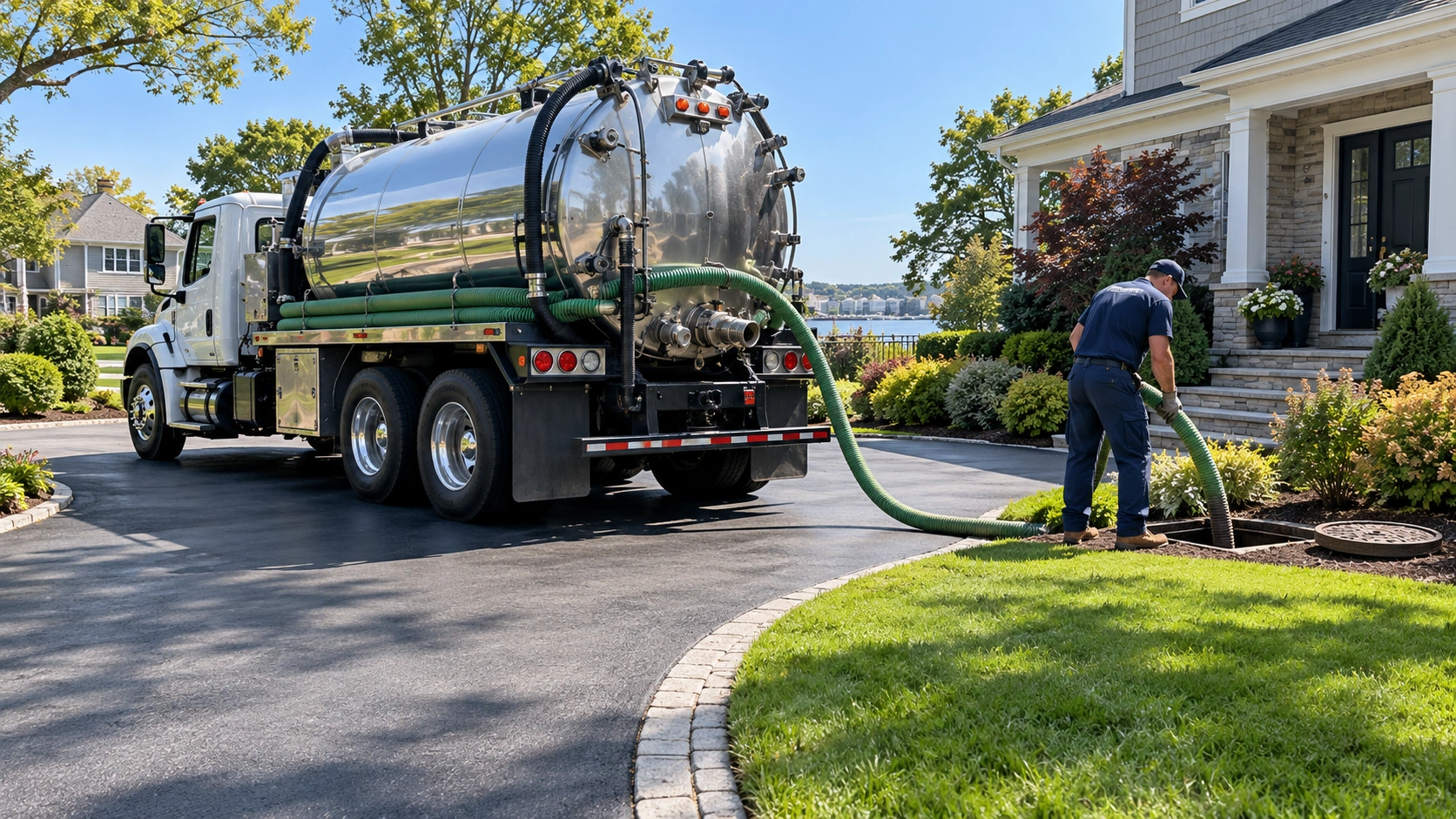
The method is matched to the material, blockage, and condition of the pipe. A cable machine can open common stoppages and cut through some root masses. Hydro jetting uses controlled high-pressure water to scour grease, sludge, scale, and remaining debris, but it is not automatically appropriate for a collapsed or badly separated line. Fragile pipe is evaluated before aggressive cleaning.
We establish safe access, protect nearby surfaces, and advance the selected equipment through the affected run. Removed material and flow behavior provide additional evidence about the cause. If a camera is appropriate, a follow-up pass checks whether the restriction is gone and whether cracks, offsets, bellies, or root openings remain.
The owner receives a clear explanation of what was found, what cleaning was completed, and whether monitoring or repair is recommended. Camera images or video findings and applicable warranty terms are documented for the completed scope. We do not describe a damaged line as permanently fixed when cleaning has only restored temporary flow.
When Is Drain Cleaning Not Enough
Cleaning is not a complete repair when the camera shows a collapsed section, severe offset, open joint, recurring root entry, or a low area that holds wastewater after the line has been cleared. These defects can collect paper and solids again, so repeated snaking may provide only a short interval of relief. The appropriate next step depends on location, material, depth, and the amount of sound pipe that remains.
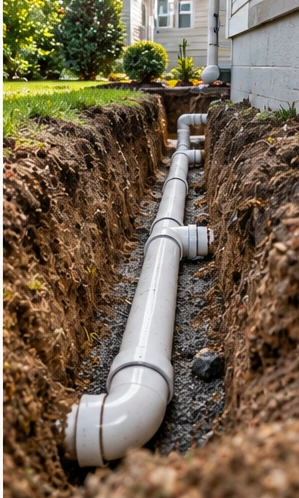
A small accessible section may be repaired conventionally. A structurally suitable lateral may qualify for trenchless lining, while a badly deformed or incorrectly graded pipe may need excavation and replacement. We explain the evidence and practical options before recommending additional work. Cleaning and camera findings should define the repair scope, not be used to sell an unnecessary full-line replacement.
How Much Does Drain and Sewer Cleaning Cost
Basic drain snaking commonly falls around $150 to $350. Main-line cleaning, difficult access, camera work, or hydro jetting may range from roughly $350 to $1,200 or more. These are directional Long Island ranges rather than fixed quotes. Emergency timing, pipe length, blockage severity, equipment access, cleanout availability, and repeat passes affect the total.
Excavation, pipe repair, trenchless lining, sewage cleanup, cesspool pumping, and restoration are separate scopes unless included in the estimate. Massapequa Plumbing Experts explains the applicable price and what it covers before approved work begins.
Why Choose a Licensed Local Drain Cleaning Company
Massapequa Plumbing Experts brings 10 years of plumbing experience to recurring clogs, main-line backups, pipe inspection, and drain repair. A licensed master plumber is available for plumbing work within the service scope. We diagnose the affected section before recommending equipment and favor non-invasive access when it can produce a dependable result.
Local knowledge helps us ask better questions about postwar housing, mature trees, coastal conditions, mixed wastewater connections, and access around finished basements or established yards. It does not replace inspection. Each recommendation is based on the property’s actual symptoms, line material, camera findings, and drainage layout.
Related Drain and Sewer Services
Clogged drain cleaning addresses fixture and branch-line stoppages.
Sewer line camera inspection documents pipe condition and the location of recurring defects.
Trenchless sewer line replacement may rehabilitate a suitable damaged lateral with less surface excavation.
Which Areas Do We Serve Near Massapequa
Service covers East Massapequa, North Massapequa, Nassau Shores, Harbor Green, Bar Harbor, Unqua, and Biltmore Shores. Scheduling also extends to Massapequa Park, Seaford, Amityville, Wantagh, Farmingdale, Bethpage, and North Amityville according to the work required and availability. Review our areas served near Massapequa for the complete list.
Frequently Asked Questions
What causes a main sewer line to back up in a Massapequa home?
Tree roots growing into aging cast iron or clay pipe, salt-air accelerated corrosion, and grease or debris buildup are the most common causes we see across Massapequa.
How do I know if it's a main line problem instead of one clogged drain?
If multiple fixtures back up at the same time, or water backs up somewhere else when you flush the toilet, that points to the main line rather than a single local clog.
Do you camera inspect before cleaning the sewer line?
Yes, every main line job starts with a camera inspection so we know the pipe material and condition before choosing between snaking, hydro jetting, or trenchless repair.
How much does main sewer line cleaning cost in Massapequa?
Standard snaking runs lower, while a camera-assisted hydro jetting job on a longer or harder to access line costs more; we quote the exact price after the camera inspection, before any work starts.
Can an old sewer line be repaired without digging up my yard?
In many cases yes, trenchless pipe lining can rehabilitate an aging cast iron or clay line without excavating a mature Massapequa yard or driveway.
Does my home connect to municipal sewer or a cesspool in Massapequa?
Many Massapequa properties still run on cesspools rather than municipal sewer; we can confirm which system your home has and clean or repair either type.